
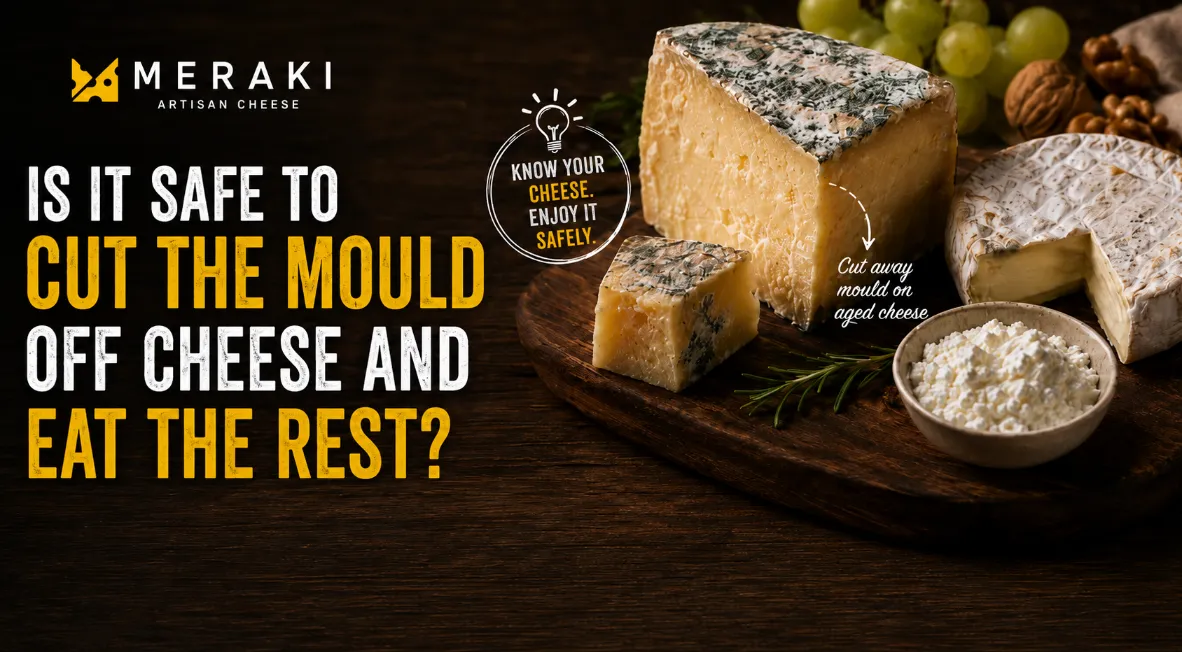
The answer is not a simple yes or no. It depends on the type of cheese sitting on your board, the kind of mould you see, and how that cheese was meant to age in the first place.
For many people, discovering a patch of mould on cheese triggers an instant reaction: throw it away. Yet for artisan cheesemakers and seasoned cheese lovers, mould is not always the villain. In fact, some of the world’s most celebrated cheeses owe their character, aroma, and complexity to carefully managed moulds and natural rind development.
As one of the best cheese brands in India, we create all our handcrafted natural cheeses using traditional cheesemaking methods. That is why understanding the delicate relationship between cheese and mould is an important part of appreciating authentic cheesemaking. After all, cheese is a living, fermented food, and its journey does not end when it leaves the creamery.
So, if you spot mould on cheese, should you scrape it off, cut around it, or throw the entire piece away? Let’s explore the science, the myths, and the practical rules every cheese lover should know.
Why Mould and Cheese Have a Long History Together
Before deciding whether mouldy cheese is safe to eat, it helps to understand an important fact: Cheese and mould have always been connected. Many artisan cheeses develop natural microbial communities during ageing. These communities include beneficial bacteria, yeasts, and moulds that contribute to flavour, aroma, texture, and rind formation. During the ageing process, known as affinage, these microorganisms help transform a simple block of curd into a complex, flavour-rich cheese. This is why certain aged cheeses naturally develop:
- Natural rinds
- Bloomy white surfaces
- Blue veins
- Earthy aromas
- Distinctive textures
In other words, not all mould is a sign of spoilage.
What is Cheese Rind?
One of the biggest misconceptions among consumers is that every visible surface growth on cheese is dangerous. In reality, many aged cheeses intentionally develop a rind. A cheese rind is the outer layer that forms during ageing. It acts as a protective barrier while helping the cheese mature and develop its unique character. Depending on the cheese, the rind may be:
- Natural
- Bloomy
- Washed
- Mixed-culture
Natural rind development is particularly common in artisan cheeses. Slight variations in colour, texture, and even mould patterns are often signs of authentic ageing rather than defects. This is one reason handcrafted cheeses look alive and dynamic, unlike highly processed cheeses designed for uniformity.
Aged Cheese: When Mould is Normal and Sometimes Necessary
For aged cheeses, mould is often part of the story. As cheese matures, the microbial ecosystem continues evolving. New bacterial and fungal cultures emerge on the surface and inside the cheese, helping create depth of flavour and aroma. Natural rind formation is one of the most visible outcomes of this process. Some prominent examples include:
- Natural-rind cheeses
- Bloomy-rind cheeses
- Certain semi-hard artisan cheeses
- Blue cheeses
In these cheeses, mould isn’t merely tolerated; it is expected. This explains why experienced cheesemakers often view a small amount of surface mould as normal during storage and ageing.
Fresh Cheese and Mould: A Completely Different Story
Fresh cheese follows a different set of rules. Unlike aged cheeses, fresh cheeses have higher moisture content and have not undergone prolonged ageing. This moisture allows unwanted microorganisms to spread much more easily throughout the cheese. Some common fresh cheeses include:
- Fresh mozzarella
- Ricotta
- Cottage cheese
- Fresh chèvre
If mould appears on these cheeses, it is generally considered undesirable and unsafe. Due to their high moisture content, mould can penetrate well beyond what is visible on the surface. Therefore, simply cutting away the affected area may not remove the contamination.
Rule of Thumb: Moulding is undesirable for fresh cheese. If fresh cheese develops unexpected mould, it is usually best to discard it rather than attempt to salvage it.
So, can you cut off the mould and eat the Rest?
For many aged cheeses, yes and for fresh cheeses, no. That distinction is crucial. Hard and semi-hard aged cheeses have dense structures that make it difficult for mould roots to spread deeply. In these cases, unwanted surface mould often remains near the exterior. Hence, removing the mouldy section can leave the remaining cheese safe to consume. This is why many cheesemakers and cheese experts recommend trimming or scraping away surface mould on aged cheeses rather than discarding the entire piece.
Unlike Cheese Wax, Natural Rinds Can Breathe
Many industrial cheeses are coated with wax or synthetic coverings. However, natural artisanal cheeses are different. Their rinds remain active and breathable. This allows microbial communities to continue shaping flavour and texture during maturation. Given this living nature, some degree of mould growth is often expected.
This distinction explains why consumers sometimes panic when they see mould on artisan cheese while accepting perfectly smooth wax-coated supermarket cheese. The truth is that artisan cheese often expresses exactly what it was designed to do.
When Scraping Off Mould Makes Sense
For properly aged artisan cheeses, minor surface mould can often be removed.
In fact, traditional cheese-care guidance frequently recommends scraping or trimming away any unwanted mould that develops during storage. The remaining cheese can often be enjoyed without issue. Situations where scraping may be appropriate include:
- Hard-aged cheeses
- Semi-hard aged cheeses
- Natural-rind cheeses
The goal is not to remove the rind itself but to eliminate excess surface growth that developed after purchase.
Cheese Storage Tips: The Real Secret to Preventing Unwanted Mould
Most mould problems begin long before the mould becomes visible. Improper storage can create the ideal environment for unwanted growth. According to artisan cheese care principles, aged cheeses should be stored carefully to retain their quality and balance. To keep your cheese at its best, try following these simple storage tips:
- Remove cheese from vacuum packaging after opening
- Wrap loosely in breathable paper or cloth
- Store inside a container
- Allow regular airflow
- Avoid airtight sealing over a long period
- Keep away from excess moisture
- Never freeze artisan cheese unnecessarily
Think of cheese as a living ingredient rather than an inert grocery item. The better you care for it, the longer it rewards you with exceptional flavour.
Warning Signs You Should Not Ignore
Not all moulds deserve the benefit of the doubt. While natural rind development can be perfectly normal, certain warning signs indicate that a cheese may have spoiled. If you notice any of these changes, it may be time to discard the cheese:
- Excessive sliminess
- Strong ammonia odours
- Sour or rotten smells
- Unusual discolouration ranging from green, blue to pink, orange
- Excess moisture accumulation
- Major structural breakdown
Artisanal cheese should smell alive and expressive, not rotten or chemically harsh. High-quality cheese often develops earthy, nutty, grassy, mushroom-like, or savoury aromas during ageing. When in doubt, trust both your senses and the storage instructions provided by the cheesemaker.
Why Natural Cheese Behaves Differently
One reason consumers struggle with mould questions is that they compare artisan cheese with processed cheese. The two are fundamentally different. Natural artisan cheese contains active cultures and undergoes natural maturation. Processed cheese, on the other hand, is often designed for maximum uniformity and shelf stability. This means artisan cheese may:
- Continue evolving after purchase
- Develop subtle rind changes
- Show seasonal variation
- Exhibit natural surface growth
These characteristics are signs of authenticity rather than imperfection.
The Meraki Cheese Perspective
At Meraki Cheese, cheesemaking is approached as a craft rather than a manufacturing process. The cheeses are handcrafted using traditional methods, allowing natural ageing and flavour development to occur without relying on artificial shortcuts.
Since natural cheese is a living food, understanding how to store and care for it becomes part of the experience. A small amount of mould on a properly aged cheese should not automatically trigger panic. In many cases, it simply reflects the natural biology that makes artisan cheese so fascinating.
However, fresh cheeses require much greater caution. Their moisture-rich structure makes mould growth a serious concern, and consuming them after mould appears is generally not advisable.
The Final Thoughts: Discover Cheese the Way It Was Meant to Be
So, is it safe to cut the mould off the cheese and eat the rest? For aged cheeses, often yes and for fresh cheeses, generally no. The key lies in understanding the type of cheese you are dealing with. Aged artisan cheeses naturally interact with beneficial moulds throughout their maturation journey. Surface mould on these cheeses can frequently be scraped or trimmed away, allowing the rest of the cheese to be enjoyed. Fresh cheeses, however, are far less forgiving and should usually be discarded once mould appears.
The next time you notice mould on your cheese, resist the urge to make a snap judgment. Look closer to consider the age, style, storage conditions, and intended rind development. Because in the world of authentic artisan cheese, mould is not always a warning sign. Sometimes, it is simply part of the masterpiece.
If you are passionate about fresh, natural cheese in Kolkata made with traditional artisanal methods, explore the thoughtfully curated collection from Meraki Cheese. From fresh favourites to beautifully aged varieties, all our cheeses reflect craftsmanship, patience, and a genuine love for the art of cheesemaking. So, experience the difference that real cheese care, authentic ageing, and exceptional ingredients can make on your plate.