
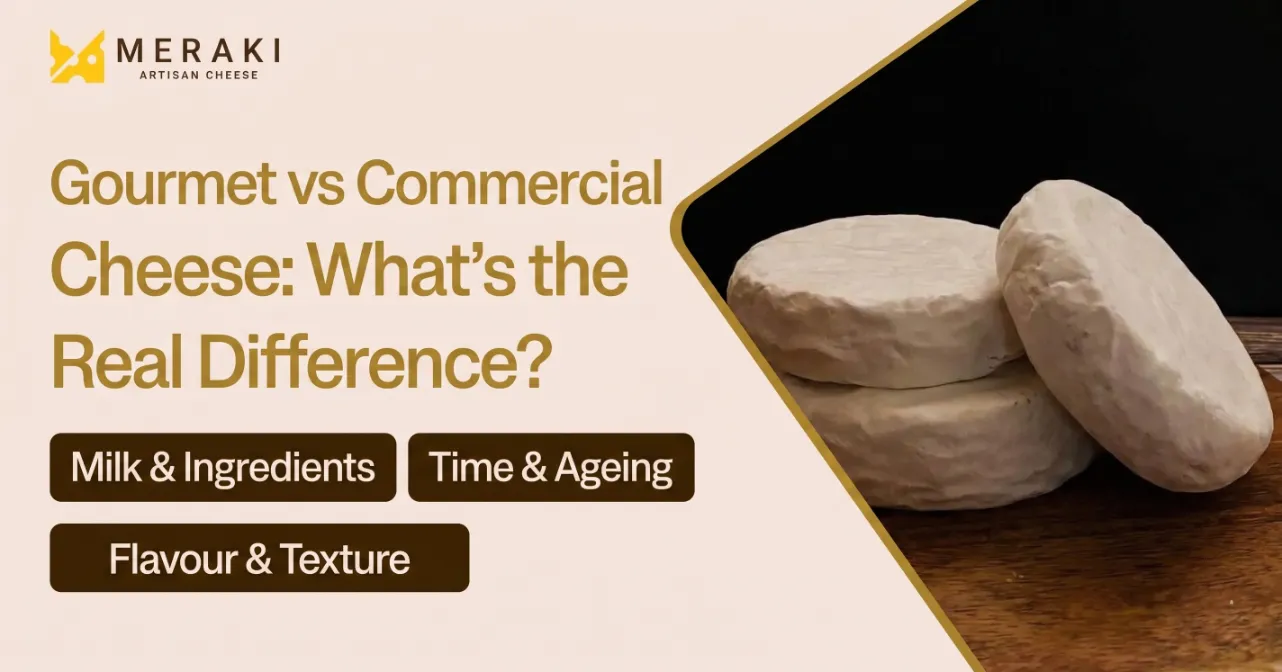
There was a time when “cheese” in India meant a processed cube wrapped in silver foil or a quick-grating block destined for sandwiches and street-style pasta. Today, however, the conversation has evolved. Discerning food lovers are seeking depth, authenticity, craftsmanship, and flavour. The rise of artisanal cheesemaking has transformed cheese from a mere ingredient into a gourmet experience.
But what truly separates gourmet cheese from commercial cheese? Is it simply about price and presentation, or is there a deeper story hidden beneath every rind and wheel?
The answer lies in craftsmanship, ingredients, time, culture, and philosophy.
Brands like Meraki Cheese are redefining how people experience cheese by bringing handcrafted, preservative-free, natural, unprocessed cheese into contemporary kitchens and elegant dining tables.
Cheese Is Not Just Cheese Anymore
The modern gourmet consumers no longer want food that is merely convenient. They want food with provenance, food with character and food that feels alive.
Commercial cheese is designed for mass consumption. Gourmet cheese is designed for sensory experience. One prioritises consistency at an industrial scale; the other celebrates individuality, craftsmanship, and complexity.
This distinction has become increasingly important as Indian consumers develop a more refined palate and a stronger interest in artisanal foods. The growth of handcrafted cheese brands across India reflects this cultural shift toward conscious and elevated eating.
The Difference Begins with Ingredients
Perhaps the biggest distinction between gourmet and processed cheese lies in the quality of milk and the integrity of ingredients.
- Commercial cheese production often depends on standardised milk, stabilisers, emulsifiers, artificial colouring, preservatives, and flavour enhancers. The goal is shelf stability and uniformity. Every slice must taste identical, regardless of season or milk variation.
- Gourmet cheese operates differently. Artisanal cheesemakers typically work with fresh milk, smaller batches, traditional cultures, and natural ageing processes. At Meraki Cheese, the emphasis is on natural, unprocessed cheese made without shortcuts, artificial additives, or mass-production methods. Our cheeses are handcrafted using hormone-free farm milk and traditional artisanal techniques.
That difference becomes immediately noticeable in texture, aroma, and flavour depth. A commercial cheddar may taste flat and overly salty. A naturally aged artisanal cheddar, on the other hand, develops nutty undertones, savoury complexity, and a lingering richness that evolves on the palate.
Texture: Uniform vs Alive
- Commercial cheese is engineered for predictability. It melts the same way every time. It slices evenly. It behaves consistently in factory kitchens and fast-food chains. While convenient, this uniformity often comes at the cost of personality.
- Gourmet cheese, on the other hand, is intentionally expressive. A handcrafted Burrata may ooze differently depending on the season. A wheel of Gouda may develop subtle flavour shifts during ageing. A Feta cured naturally in Brine may carry mineral nuances impossible to replicate in industrial manufacturing.
This living quality is exactly what makes gourmet cheese luxurious. It feels less like a processed dairy product and more like a crafted culinary creation.
The Art of Time and Ageing
Time is one of the most expensive ingredients in artisanal cheesemaking.
- Commercial cheese production is built around speed and efficiency. Faster processing means higher output and lower costs. Ageing is often shortened or chemically accelerated.
- Gourmet cheese, on the other hand, embraces patience. Natural ageing allows proteins and fats to break down gradually, creating nuanced flavours and richer textures. This process requires skill, climate control, monitoring, and constant care.
Artisan cheesemakers understand that exceptional cheese cannot be rushed. At Meraki, the philosophy centres on handcrafted precision and traditional cheesemaking practices, allowing each cheese variety to develop its own distinct personality. Our handcrafted selection includes fresh cheeses, aged cheeses, gourmet variants, spreads, and curated platters designed for elevated culinary experiences.
Flavour Complexity: The Ultimate Luxury
The flavour gap between gourmet and commercial cheese is enormous.
Commercial cheese generally delivers one-dimensional flavour profiles: salty, creamy, mildly tangy, or heavily processed.
Gourmet cheese unfolds in layers. You may notice earthy notes in a Camembert, caramel undertones in an aged Gouda, grassy freshness in Feta, or delicate creaminess in handcrafted Mozzarella.
These layers emerge from:
- Natural bacterial cultures
- Fresh milk quality
- Traditional ageing
- Small-batch production
- Climate and terroir
- Handcrafted techniques
This complexity is why gourmet cheese pairs beautifully with wine, fruits, artisanal bread, nuts, preserves, and even Indian fusion cuisine. Gourmet cheese is no longer merely an add-on; it becomes the centrepiece.
The Human Touch Matters
Do you know that industrial cheese production depends heavily on automation? Machines regulate everything, including texture, shape, slicing, and packaging.
Artisanal cheese still depends on human instinct. A cheesemaker monitors moisture levels by touch. They assess ageing visually. They make subtle adjustments depending on milk behaviour, weather conditions, and fermentation activity. This human involvement creates individuality.
The story of Meraki Cheese is particularly compelling because the brand is driven by an all-women artisanal cheesemaking team based in Kolkata. Founded as a labour of love, the brand reflects creativity, craftsmanship, and passion; values embedded in the very meaning of the word “Meraki.” This emotional connection often becomes a part of the gourmet food experience itself.
Health and Clean Eating Considerations
Today’s consumers are no longer impressed by glossy packaging alone; they are scrutinising ingredients, questioning processing methods, and actively choosing authenticity over artificial convenience.
Commercial cheese often contains:
- Artificial emulsifiers
- Added preservatives
- Excess sodium
- Modified starches
- Synthetic colouring agents
Gourmet artisanal cheese usually follows a cleaner ingredient philosophy. Natural cheese crafted in small batches often contains fewer additives and relies on traditional fermentation for flavour and preservation.
Meraki Cheese specifically highlights its commitment to real, unprocessed cheese without artificial shortcuts or mass-manufacturing practices. For conscious consumers, this distinction matters enormously. The shift toward artisanal cheese is not just about indulgence; it is also about transparency, authenticity, and mindful eating.
Gourmet Cheese Elevates Experiences
Commercial cheese is functional while gourmet cheese is experiential.
A beautifully assembled cheese platter can instantly transform gatherings into sophisticated culinary moments. Wine evenings become more refined, and home entertaining feels luxurious.
This is why artisanal cheese has become increasingly popular at:
- Luxury brunches
- Intimate dinners
- Corporate gifting
- Wedding hampers
- Grazing tables
- Fine dining experiences
The growing popularity of artisanal platters and cheese-tasting culture in India reflects this evolution. Brands like Meraki Cheese have helped introduce gourmet cheese appreciation, curated platters, and cheese-pairing experiences to a broader audience.
India’s Cheese Culture Is Undergoing a Renaissance
For decades, processed cheese dominated Indian households simply because gourmet alternatives were limited. However, this is changing rapidly. Today, Indian consumers are actively exploring:
- Burrata
- Halloumi
- Gouda
- Feta
- Camembert
- Cheddar
- Fresh mozzarella
- Washed-rind cheeses
- Bloomy-rind varieties
The artisanal cheese movement in India is growing as consumers become more adventurous, globally aware, and quality-conscious. Industry reports and food publications have increasingly highlighted the rise of Indian artisanal cheesemakers and the growing appreciation for handcrafted cheese culture. This new generation of cheese lovers wants authenticity over artificiality.
The Closing Thoughts: Which One Should You Choose?
Commercial cheese certainly has its place. It is affordable, accessible, and convenient for everyday cooking. However, gourmet cheese offers something profoundly different.
It offers craftsmanship, storytelling, sensory depth and culinary sophistication. Most importantly, it offers authenticity in a world increasingly dominated by industrial food production. Therefore, choosing gourmet cheese means choosing quality over shortcuts and experience over uniformity.
As India’s gourmet food culture continues to evolve, artisanal cheesemakers are redefining how consumers experience cheese altogether. Brands like Meraki Cheese are helping lead this transformation through handcrafted cheeses that celebrate natural ingredients, traditional techniques, and refined flavour experiences. Whether you want to elevate your cheese boards, curate luxurious gatherings, or order gourmet cheese online for an indulgent everyday experience, Meraki Cheese brings artisanal excellence straight to your table. If your palate is ready for cheese that feels thoughtfully crafted rather than mass-produced, step into the world of Meraki Cheese and turn every meal, gathering, and indulgence into a truly gourmet affair.
Fun Fact: Did you know that the world’s oldest discovered cheese is believed to be over 3,600 years old? Archaeologists found ancient preserved cheese in Egyptian tombs, proving that humanity’s love affair with artisanal cheese has existed for millennia, long before processed cheese ever entered the picture.