
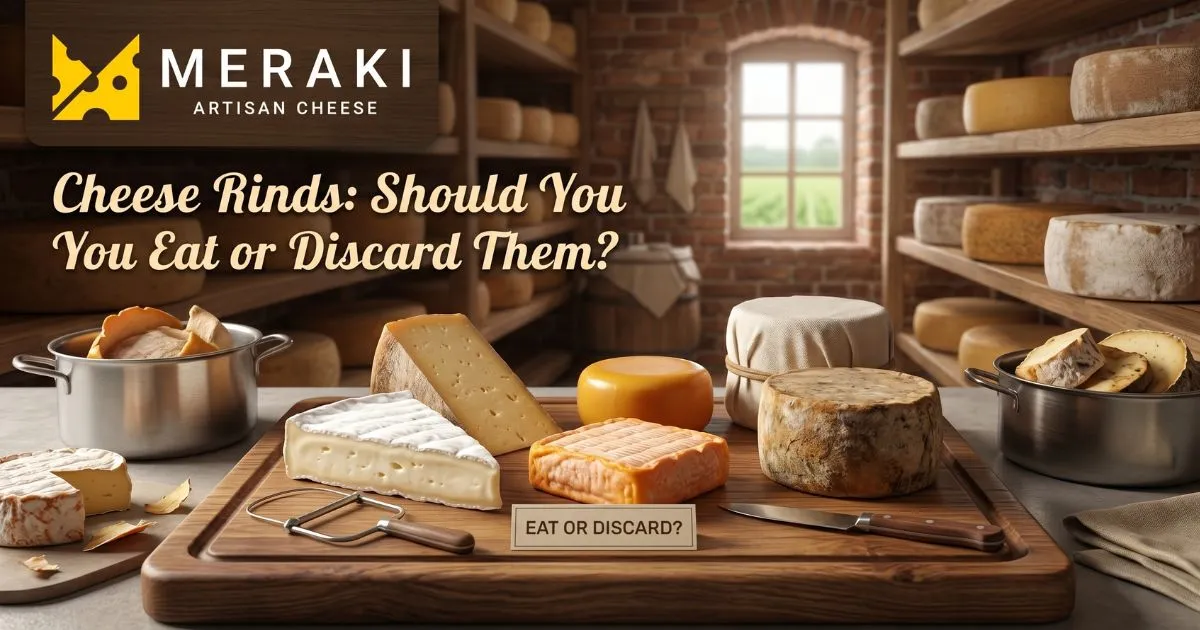
There is something undeniably romantic about a beautifully aged wheel of cheese. The earthy aroma, the textured exterior, the promise of flavours waiting beneath the surface; it is food crafted with patience and intention. Yet, many cheese lovers hesitate at the very first bite, wondering, ‘Should I eat the rind or cut it away?’ The answer is not as straightforward as yes or no.
Some rinds are delicious and integral to the tasting experience, while others are meant to protect the cheese and are best left on the board. Hence, understanding the difference can enhance how you enjoy artisanal cheese and help you appreciate the craftsmanship behind every wheel.
What Exactly is a Cheese Rind?
A cheese rind is the outer layer that forms during cheesemaking and ageing. Think of it as the natural skin of a cheese. Depending on the type of cheese and the ageing technique used, the rind may develop naturally, be encouraged with beneficial moulds, or be created artificially to preserve freshness. For artisanal cheesemakers, the rind is often more than just a covering; it is a reflection of the cheese’s personality. It influences aroma, texture and flavour while protecting the delicate interior during maturation.
At Meraki Cheese, where exclusive handcrafted artisanal cheeses in Kolkata are made in small batches using traditional methods and natural ingredients, the focus remains on preserving authenticity at every stage, including the ageing process that gives cheeses their unique character.
Why are Cheese Rinds Important?
Imagine baking bread and discarding the crust before tasting it. In many cheeses, the rind is just as essential. The rind:
- Protects the cheese as it matures
- Encourages the development of complex flavours
- Influences texture and aroma
- Creates a barrier against undesirable microbes
- Gives each cheese its distinctive appearance
Natural and artisanal cheesemaking relies heavily on these slow processes. The flavours are not manufactured in factories or created with additives; they evolve gradually through ageing, microbial activity, and craftsmanship. This is precisely why artisanal cheeses taste so different from heavily processed varieties. Every wheel develops its own nuances, and the rind is often responsible for much of that magic.
The Four Main Types of Cheese Rinds
From velvety blooms to waxy shells, cheese rinds are wonderfully diverse. Hence, knowing the type of rind can tell you instantly whether it belongs in your mouth or your compost bin.
Bloomy Rinds: Absolutely Eat Them
Bloomy rinds are soft, white, and velvety. They are formed by beneficial mould cultures that grow on the surface during ageing. If you’ve ever admired a snowy white Brie or Camembert, you’ve seen a bloomy rind. These rinds are:
- Soft and edible
- Slightly mushroomy in flavour
- Creamy and delicate
- Essential to the cheese experience
In fact, removing the rind from bloomy cheeses means missing out on the beautiful contrast between the earthy exterior and the silky centre.
Verdict: You can eat this edible cheese rind with confidence.
Washed Rinds: Bold but Edible
Washed-rind cheeses are famous for their strong aroma. During ageing, cheesemakers wash the cheese surface with brine or other liquids to encourage specific bacteria. The result? A sticky rind with pungent aromas and intense flavours. For beginners, washed rinds can feel intimidating. They may smell stronger than they taste, but the flavours are often savoury, rich and surprisingly balanced.
Verdict: Yes, eat them, especially if you enjoy adventurous flavours.
Natural Rinds: Rustic and Delicious
Natural rinds form naturally as moisture evaporates during ageing. They are often:
- Earthy
- Slightly firm
- Dry or wrinkled
- Rich in complex flavours
Natural rinds tell the story of the ageing journey of a cheese. Some may taste nutty and savoury, while others carry hints of cellar, hay, or roasted nuts. Since they are created through natural maturation, they are usually safe and enjoyable to eat, though the texture can occasionally be tough.
Verdict: Usually edible and worth trying.
Wax and Cloth Rinds: Better Left Alone
Every cheese rind tells a story, but not every story is meant to be tasted. Wax coatings, plastic coverings and certain cloth wrappings are used primarily for protection rather than flavour development. These include:
- Red wax coatings
- Black wax shells
- Plastic coverings
- Heavy cloth bindings
These rinds are non-edible and often difficult to chew. If the rind feels rubbery, waxy or artificial, it is best removed before serving.
Verdict: Discard.
How Can You Tell if a Rind Is Edible?
A simple rule of thumb is this:
If the rind developed naturally during ageing, it is generally edible. If it was added for packaging or preservation, it should be removed.
Still unsure? Then ask yourself these questions:
- Does it look mouldy in a soft, velvety way? Then eat it.
- Is it dry and rustic? You can try a small piece.
- Is it waxy, shiny or plastic-like? Remove it immediately.
- Does it feel impossible to bite? Just skip it.
Remember, edible does not always mean enjoyable. When it comes to cheese rinds, your palate is the ultimate judge.
Why Some People Prefer Not to Eat Cheese Rinds
Even among cheese connoisseurs, rind preferences vary. Some people avoid cheese rinds because:
- They dislike earthy flavours.
- The texture feels too chewy.
- The aroma is overpowering.
- They prefer a milder tasting experience.
All that is perfectly fine because cheese appreciation is deeply personal. There are no rigid rules that say you must eat every rind to be a “true” cheese lover. The joy lies in discovering what excites your palate.
Are Cheese Rinds Nutritious?
Surprisingly, yes. Edible rinds contain many of the same nutrients as the cheese itself, including:
- Protein
- Calcium
- Beneficial bacteria
- Vitamins from milk
- Natural compounds formed during fermentation
Artisanal cheeses, in particular, are often valued for being made with simple ingredients and traditional fermentation methods rather than relying on extensive additives or preservatives. Research and industry trends show that consumers are increasingly seeking naturally produced cheeses with authentic ingredients and mindful production practices.
Creative Ways to Use Cheese Rinds
Even if you don’t want to eat a rind directly, don’t throw it away immediately. It’s because hard cheese rinds can add incredible flavour to everyday dishes. You can try using them in:
- Soups: You can drop a rind into vegetable soup or tomato soup while simmering. It can release savoury, umami flavours and add depth to the soup.
- Pasta Sauces: A leftover rind simmered gently in cream or tomato sauce can create a remarkable richness.
- Risottos: Add a rind while cooking risotto and remove it before serving. The result is an extra layer of nutty complexity.
- Stocks and Broths: Cheese rinds can transform a simple broth into something warm, comforting and gourmet.
This practice reflects a beautiful philosophy of artisanal food; nothing is rushed, and very little goes to waste.
The Rise of Artisanal Cheese in India
India’s relationship with cheese is evolving rapidly. For years, processed cheese dominated supermarket shelves. Today, however, a new generation of cheesemakers is changing the narrative by creating handcrafted cheeses that prioritise quality, natural ingredients and traditional techniques.
The country’s artisanal cheese industry has been receiving increasing recognition, both domestically and internationally. Indian cheesemakers are experimenting with flavours, ageing methods and locally sourced milk while maintaining a strong commitment to craftsmanship. India’s artisanal cheese market is already worth USD 850 million and is expected to reach USD 1.25 billion by 2034, reflecting a growing appetite for natural cheeses that are thoughtfully crafted and rich in character (source). This growing appreciation has helped India’s artisanal cheese movement flourish in recent years.
Meraki Cheese stands proudly within this movement. Founded as an artisanal cheesemaking company in Kolkata, we embrace natural cheesemaking and small-batch production, proving that exceptional cheese is as much about passion as it is about technique.
The Final Thoughts
So, should you eat cheese rinds or discard them?
The answer is beautifully simple:
Eat natural rinds, skip artificial ones and trust your palate.
Cheese is not merely food; it is craftsmanship shaped by time, milk and imagination. The rind, whether earthy, creamy or boldly aromatic, often carries the story of that journey. The next time you unwrap an artisanal cheese, pause before reaching for the knife. Examine the rind, take in its aroma and taste a small piece. You may discover that the part you were planning to discard is actually where some of the most fascinating flavours begin.
Are you ready to experience cheese the way it was meant to be enjoyed? Explore the exquisite world of Meraki Cheese to buy gourmet cheese online, where every handcrafted creation is made with passion, natural ingredients and artisanal expertise. Whether you are discovering the magic of edible rinds or searching for your next favourite cheese, we invite you to savour authentic flavours that celebrate craftsmanship in every bite. Elevate your cheese journey today and indulge in a collection that can transform everyday moments into extraordinary experiences.