
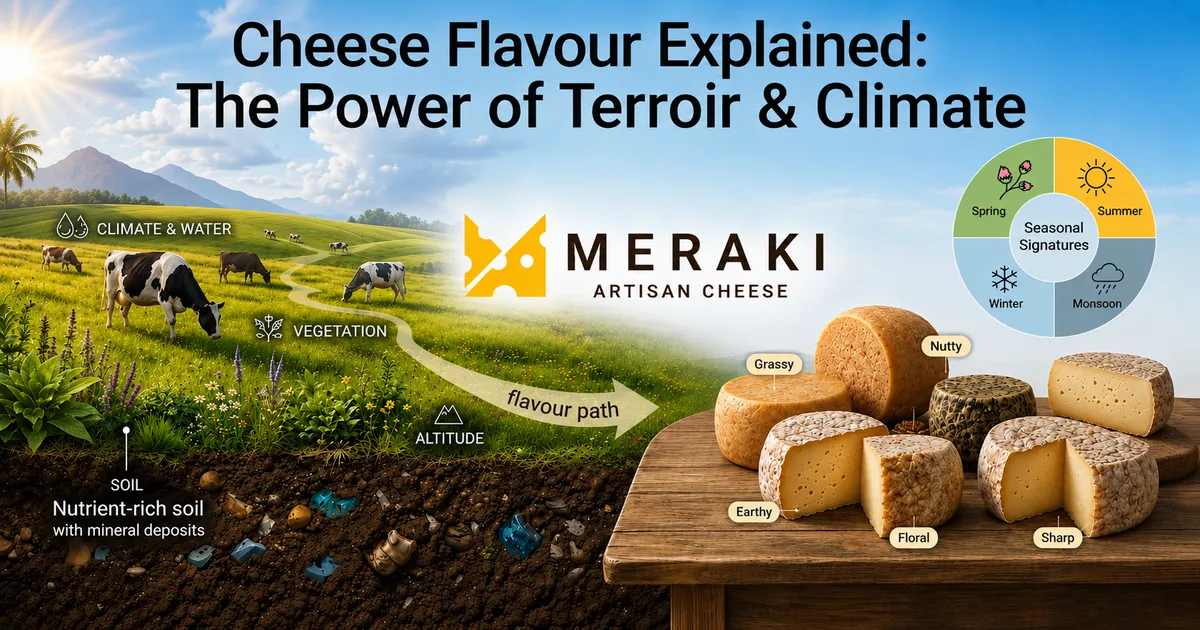
Cheese is often described through tasting notes: nutty, grassy, buttery, earthy, fruity, sharp, floral, or even smoky. Yet behind every remarkable cheese lies a far deeper story than flavour alone. The true personality of a cheese is shaped long before it reaches the cheesemaker’s ageing room. It begins in the soil, travels through the grass, influences the milk, and ultimately finds expression in every bite.
This fascinating relationship between land, environment, and flavour is known as terroir. While the term is commonly associated with wine, it is equally important in artisanal cheesemaking. In fact, some of the world’s most celebrated cheeses owe their distinctive taste not only to technique but also to the unique climate, geography, vegetation, and farming traditions of their place of origin.
As India’s artisanal cheese movement continues to evolve, brands like Meraki Cheese are helping consumers appreciate that exceptional cheese is not merely manufactured; it is nurtured by nature itself. Today, cheese enthusiasts can even explore and buy artisan cheese online, making it easier than ever to experience authentic, handcrafted flavours shaped by terroir and tradition.
What Exactly Is Terroir?
The word terroir originates in France and refers to the complete set of environmental conditions that influence an agricultural product. It encompasses:
- Soil composition
- Climate and weather patterns
- Rainfall
- Altitude
- Natural vegetation
- Water quality
- Seasonal changes
- Traditional farming practices
When applied to cheese, terroir explains why two cheeses made using the same recipe can taste entirely different when produced in different regions. The milk itself carries subtle characteristics of the environment in which the animals graze, creating a unique flavour fingerprint that cannot be artificially replicated. In the world of artisanal cheese, terroir is often considered nature’s signature.
The Journey Begins with the Grass
Every great cheese starts with exceptional milk, and exceptional milk starts with healthy grazing land. Cows that graze on diverse pastures consume a wide variety of grasses, herbs, flowers, and native plants. These plants contain unique aromatic compounds that influence the composition of the milk.
A cow grazing in a flower-rich meadow will produce milk with different flavour characteristics than one feeding primarily on commercial fodder. The result is milk that reflects the landscape from which it came. This is one reason artisanal cheesemakers place tremendous importance on sourcing practices. Rather than viewing milk as a standard commodity, they treat it as a living ingredient whose quality changes with the seasons.
At Meraki Cheese, the emphasis on naturally sourced milk and ethical farming practices reflects a deep understanding that authentic flavour begins at the farm level, not in the factory. The brand’s commitment to working closely with local farmers supports both sustainability and flavour integrity.
Climate: The Invisible Ingredient
If terroir is the stage, climate is the lead performer. Temperature, humidity, rainfall, and seasonal variations directly affect both milk production and cheese maturation.
Warm Climates Create Distinct Challenges
India’s tropical climate presents unique opportunities and challenges for cheesemakers. Higher temperatures can influence:
- Animal feeding patterns
- Water consumption
- Milk composition
- Natural microbial activity
- Cheese ageing conditions
Unlike European regions with naturally cool caves and centuries-old ageing environments, Indian cheesemakers must carefully manage maturation conditions while still preserving authenticity. This challenge has encouraged a new generation of Indian artisanal cheesemakers to innovate and create cheeses that embrace local conditions rather than imitate foreign ones. The result is a growing category of cheeses with a distinctly Indian identity.
How Seasons Change Cheese Flavour
One of the most fascinating aspects of artisanal cheesemaking is that flavour is never static. Just as nature changes throughout the year, so does the milk used to create cheese. Each season leaves its own signature on the landscape, influencing what animals eat and, ultimately, the character of the cheese itself.
Spring
Spring marks a season of renewal. Fresh grasses, wildflowers, and tender herbs begin to flourish after winter or dry periods. As animals graze on this nutrient-rich vegetation, their milk often develops delicate floral notes, natural sweetness, fresh aromas, and a remarkable complexity that reflects the vibrancy of the season.
Summer
During summer, abundant grazing conditions allow animals access to lush pastures. The result is milk that is often richer and higher in butterfat. Cheeses produced during this period tend to be creamier, fuller-bodied, and more aromatic, offering a luxurious mouthfeel and deeper flavour profile.
Monsoon
The monsoon brings dramatic changes to the landscape. Increased rainfall transforms pastures and encourages new plant growth, introducing a variety of herbs and grasses into the animals’ diet. These shifts can impart subtle herbal flavours, enhanced mineral characteristics, and unique textural nuances that make monsoon-produced cheeses particularly intriguing.
Winter
Winter often brings limited grazing opportunities and changes in animal feed. These factors can lead to milk with deeper, richer characteristics. Cheeses crafted during this season, especially those that are aged, frequently develop stronger, more concentrated flavours with greater depth and intensity.
For artisanal cheesemakers, these seasonal variations are not flaws to be corrected but natural expressions of authenticity. They reflect the living relationship between the land, the climate, the animals, and the cheesemaker’s craft, ensuring that every batch tells a unique story of its time and place.
Microflora: Nature’s Hidden Flavour Architects
One of the most fascinating yet often overlooked aspects of terroir is the role played by naturally occurring microorganisms. Every environment hosts its own unique communities of yeasts, bacteria, and moulds, which quietly influence the character of cheese throughout the ageing process. These microscopic organisms help shape flavour, aroma, texture, rind development, and even the speed at which a cheese matures.
The microbial ecosystem found on a dairy farm in the Himalayas is vastly different from that of a farm along India’s coastline. As a result, cheeses produced in these regions can develop remarkably distinct personalities, even when similar cheesemaking techniques are used. Many of the world’s most iconic cheeses owe their uniqueness to local microbial cultures that have evolved naturally over generations. For artisanal cheesemakers, preserving this biodiversity is essential to maintaining authenticity and complexity in every wheel.
Soil Matters More Than You Think
While cheese may seem far removed from the ground beneath our feet, soil plays a surprisingly important role in shaping cheese flavour. Healthy, nutrient-rich soil supports a diverse range of grasses, herbs, and plants. This diverse vegetation provides better grazing for dairy animals, which in turn produces richer, more flavourful milk.
The relationship is simple yet powerful: healthy soil nurtures healthy pastures, healthy pastures produce exceptional milk, and exceptional milk creates exceptional cheese. Mineral-rich soils can also contribute subtle flavour nuances that reveal themselves during ageing. Though these characteristics may be difficult to identify individually, they add depth, complexity, and a distinctive sense of place that sets artisanal cheeses apart from mass-produced alternatives.
The Rise of Indian Cheese Terroir
For decades, discussions about fine cheese focused almost exclusively on Europe. Today, that narrative is changing. India’s artisanal cheese industry is rapidly developing its own identity by embracing local terroir rather than merely replicating European traditions. Indian cheesemakers are increasingly asking important questions:
- What does Indian terroir taste like?
- How can local climates influence flavour?
- Which indigenous farming practices deserve preservation?
- How can local ingredients contribute to unique cheese styles?
The answers are creating an exciting new chapter in global cheesemaking. Rather than producing copies of European classics, modern Indian artisans are crafting cheeses that tell uniquely Indian stories.
Sustainability and Terroir Go Hand in Hand
Authentic terroir cannot exist without sustainable farming. Healthy ecosystems always support:
- Biodiversity
- Soil health
- Animal welfare
- Natural grazing systems
- Water conservation
When these elements are protected, flavour flourishes naturally. This philosophy is increasingly important to modern consumers who want transparency about where their food comes from and how it is produced.
At Meraki Cheese, sustainability is not merely a trend but an integral part of the brand’s approach. By partnering with local farmers and focusing on responsible sourcing, the brand strengthens the connection between land, milk, and flavour while supporting long-term environmental stewardship.
Learning to Taste Terroir
Developing an appreciation for terroir is similar to learning to appreciate fine coffee, wine, or chocolate. The key is mindful tasting. So, ask yourself:
- Is the cheese grassy?
- Does it feel earthy?
- Are there floral notes?
- Does it remind you of fresh cream?
- Is there a mineral finish?
- How does the flavour evolve as it warms?
The more attention you pay, the more clearly you begin to recognise how nature expresses itself through cheese. Suddenly, cheese can become more than a food; it becomes a landscape you can taste.
The Conclusion: The Future of Cheese Is Rooted in Place
As consumers become increasingly interested in authenticity, sustainability, and craftsmanship, terroir is gaining renewed importance. People no longer want products that merely taste good. They want products with stories, origins, and character. They want food that reflects real people, real farms, and real environments. This shift is creating exciting opportunities for artisanal cheesemakers across India.
Brands like Meraki Cheese represent this new era; one where flavour is not engineered but cultivated, where milk is valued as a living ingredient, and where every cheese carries the unmistakable imprint of climate, geography, and craftsmanship.
In a world increasingly dominated by standardisation, terroir reminds us that the most memorable flavours are often the ones that cannot be copied. They belong to a particular place, a particular season, and a particular moment in time. And that is precisely what makes great cheese unforgettable. Are you ready to experience the true taste of terroir? Connect with Meraki Cheese to order gourmet cheese online today and elevate your cheese journey with authentic, handcrafted cheeses that tell a story of place, passion, and unparalleled quality.